BACKGROUND TO THE PROCEEDINGS
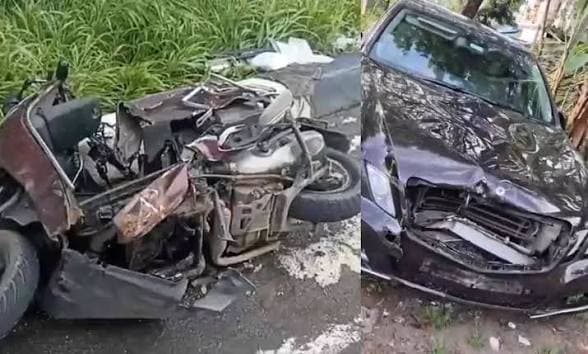
The proceedings arose from a fatal road accident reported in Cheranalloor, Kochi, in the early hours of 25 October 2026. According to the FIR, a Mercedes-Benz car allegedly collided with a scooter ridden by Jayabalakrishnan, a 55-year-old street-food vendor, who was returning home. The scooter rider died in the incident.
A 17-year-old was alleged to have been driving the car. The police initially registered offences under Sections 281 and 106(1) of the Bharatiya Nyaya Sanhita, 2023. The report states that Section 105 of the BNS was subsequently added and that the child was produced before the Juvenile Justice Board. The Board granted bail on 26 October 2026.
The State and members of the deceased’s family challenged the grant of bail before the Sessions Court. The appeals were being considered by the court when the issue of online disclosure of the child’s identity also came up.
SECTION 74 OF THE JUVENILE JUSTICE ACT PROTECTS THE CHILD’S IDENTITY
Section 74(1) of the Juvenile Justice (Care and Protection of Children) Act, 2015 prohibits the publication, in reports concerning an inquiry, investigation or judicial proceeding, of a child’s name, address, school or any other particulars likely to reveal the child’s identity. The provision also prohibits publication of the child’s photograph. The protection applies to a child in conflict with law, a child in need of care and protection, and a child victim or witness.
The statutory exception is limited: the Board or Committee conducting the inquiry may permit disclosure for reasons recorded in writing if it considers disclosure to be in the child’s best interests. Under Section 74(3), contravention of sub-section (1) is punishable with imprisonment up to six months, or fine up to two lakh rupees, or both.
The restriction is not confined to conventional print or broadcast media. The statutory expression includes other forms of communication and is therefore relevant to material circulated through social media platforms as well.
COURT ASKS CYBER POLICE TO ACCOUNT FOR ACTION ON ONLINE POSTS
During the hearing on 31 October, counsel for the child raised a complaint that social media accounts and platforms were circulating videos and other details said to disclose the child’s identity. The court questioned why the cyber police had not acted on the alleged disclosures.
The court directed the cyber police to report the action taken on the complaint. The direction, as reproduced in the LiveLaw report, was:
“The cyber police shall report the action taken on the alleged complaint raised by the counsel for the CCL regarding the publication of the identity of the CCL in various social media accounts and platforms,”
The underlying order was not available for independent examination at the time of preparation of this article. Accordingly, the above wording is reproduced from the direction quoted in the LiveLaw report; it has not been independently checked against the signed court order. The report records a direction to submit an action-taken report. It should not be overstated as a final, blanket order directing the immediate removal of every post or account.
COURT SEEKS CASE DIARY AND QUESTIONS THE BASIS FOR BAIL CANCELLATION
The court also expressed concern about the course of the investigation. It noted the sequence reported before it: the child was initially proceeded against under Section 106 of the BNS and released on station bail; Section 105 was subsequently added, after which the child was produced before the Juvenile Justice Board.
The judge questioned the prosecution about the specific investigative purpose that would be achieved by cancelling the bail already granted. The court indicated that a general assertion that cancellation would serve the interests of justice was insufficient without an explanation of the investigation-related necessity.
The prosecution submitted that the child’s interview was necessary because the circumstances in which the car was driven without a licence at about 2 a.m. were within the child’s knowledge. The court, however, referred to the condition in the bail order requiring cooperation with the investigation and questioned whether the investigating agency had approached the Juvenile Justice Board for permission to conduct a custodial interview.
Expressing serious concern about the progress of the investigation, the court directed the investigating officer to appear on 2 November 2026 and produce the case diary for the court’s perusal. The court deferred passing an order on the bail-cancellation appeals until it had examined the investigation records.
SUBMISSIONS ADVANCED BY THE PARTIES
The prosecution argued that the Juvenile Justice Board had not adequately considered the child’s previous conduct, the addition of the offence under Section 105 of the BNS, the circumstances in which the child had learnt to drive, and the absence of a driving licence. It also alleged that the child had deleted material relating to the incident, including videos, and referred to videos or reels allegedly posted by the child showing driving and speedometer readings. The prosecution further contended that placement in an observation home was necessary.
On behalf of the deceased’s family, it was argued that the proviso to Section 12 of the Juvenile Justice Act was relevant. Counsel submitted that the child could be recognised in public and might consequently face hostility, affecting the child’s mental and physical well-being. The family also challenged the manner in which bail had been granted and raised concerns about the message it could send to other minors.
The child’s counsel questioned the maintainability of the appeals and argued that the Act provided a separate procedure for seeking cancellation of bail. These were submissions of the parties; the report does not record a final determination by the court on these contentions.
LEGAL POSITION ON BAIL UNDER SECTION 12
Section 12 of the Juvenile Justice Act provides that a person who is apparently a child and is alleged to have committed a bailable or non-bailable offence is ordinarily to be released on bail, with or without surety, or placed under the supervision of a probation officer or the care of a fit person.
The proviso permits refusal of bail where there are reasonable grounds to believe that release is likely to bring the child into association with a known criminal, expose the child to moral, physical or psychological danger, or defeat the ends of justice. Reasons for refusing bail must be recorded.
In the present proceedings, the deceased’s family relied on the child-protection aspect of the proviso, while the prosecution sought cancellation by referring to the alleged conduct and investigative requirements. The court’s questions on 31 October concerned the reasons advanced for cancellation and the need for the investigating agency to explain the purpose of seeking it. The court had not, as of that hearing, finally decided whether bail should be cancelled.
WHAT THE COURT DECIDED ON 31 OCTOBER
The court directed the cyber police to submit a report on the action taken concerning social media material allegedly revealing the child’s identity.
It also directed the investigating officer to appear on 2 November 2026 with the case diary.
The bail-cancellation appeals remained pending. No final decision cancelling or affirming the child’s bail is reported in the material reviewed for this article.
JUDICIAL EXTRACT AND ITS SIGNIFICANCE
The exact signed order of 31 October 2026 was not located in the publicly accessible material reviewed. The following is the operative direction quoted by LiveLaw, rather than an extract independently verified against the original order:
“The cyber police shall report the action taken on the alleged complaint raised by the counsel for the CCL regarding the publication of the identity of the CCL in various social media accounts and platforms,”
This direction is significant because it shows the court requiring the police to account for their response to an alleged breach of the statutory confidentiality protection under Section 74. It does not, on the material available, establish that the court had finally adjudicated whether particular posts violated Section 74 or ordered the deletion of every identified post.