Coastal and hinterland Karnataka needs an Additional Bench of the High Court of Karnataka at Mangaluru, permanent or circuit. The case rests on geography, culture and a body of litigation that the Principal Bench in Bengaluru is simply too far away to serve well.
The Chief Justice of the High Court of Karnataka has constituted a committee of three judges to study the feasibility of such a bench. The question is not new to Indian constitutional practice: the Justice Jaswant Singh Commission, in its report of 30 April 1985 to the Government of India, examined the demand for benches of the Madhya Pradesh High Court in regions of that state. Mangaluru's claim deserves the same serious examination.
A bench at Mangaluru would serve Dakshina Kannada, Udupi, Kodagu, Chikkamagaluru and the adjoining coastal and hinterland districts. Nowhere is the need sharper than in the litigation surrounding the region's temples and religious institutions, which is the focus of this article.
A land of 5,000 temples and their disputes:
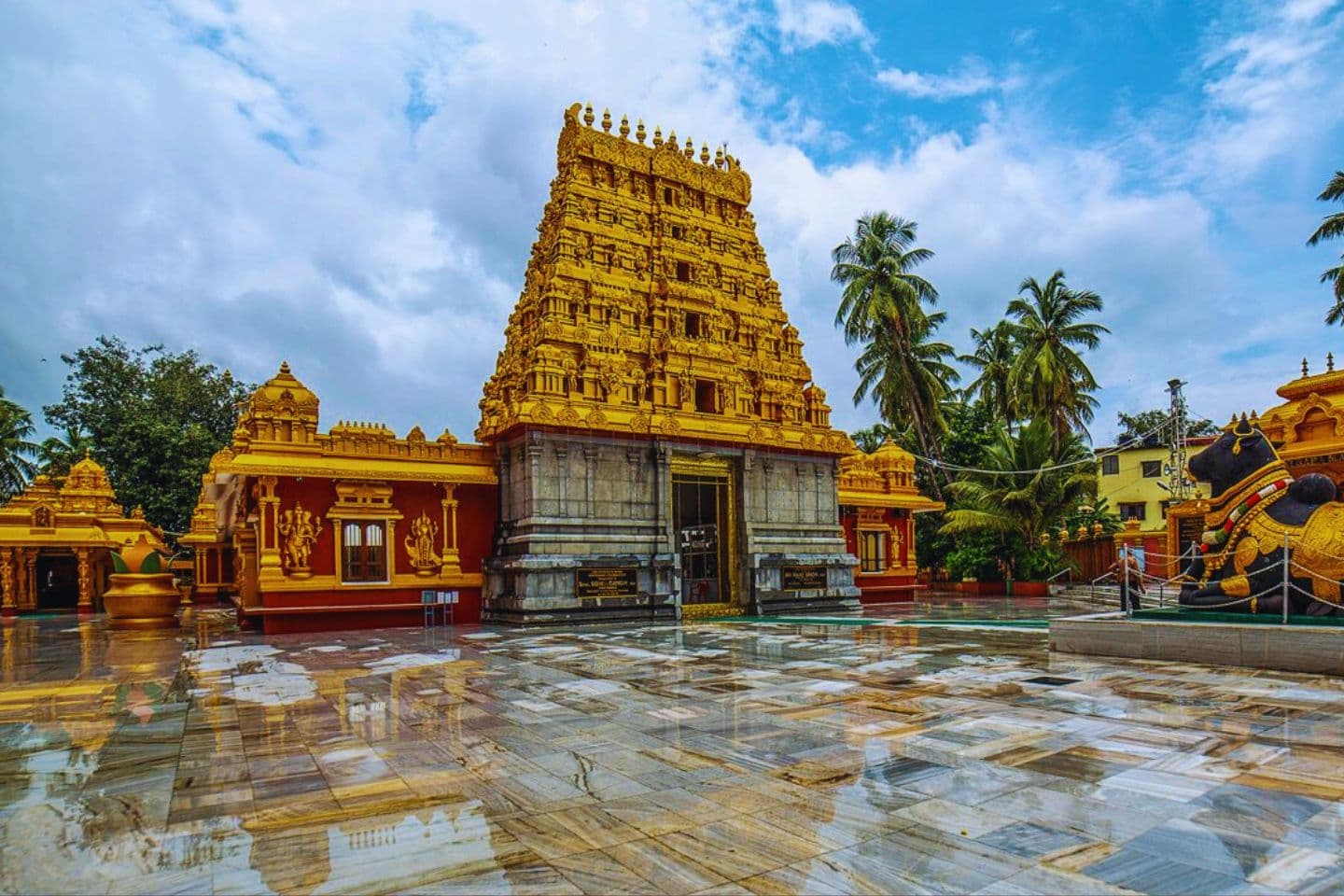
Between the Western Ghats and the Arabian Sea stand more than 5,000 traditional temples, shrines and places of worship, known locally as Devasthanas and Daivasthanas. Only a fraction are under the direct administrative control of the Department of Hindu Religious Institutions and Charitable Endowments (HRI & CE), Government of Karnataka. The vast majority are run by Committees of Management formed by founders, hereditary trustees or local devotee collectives, governed strictly by ancient local customs, traditions and usages.
These institutions generate a steady stream of litigation: civil suits, scheme suits, statutory appeals and administrative petitions before authorities under the Karnataka HRI & CE Act, 1997. There is no dedicated alternate dispute resolution mechanism suited to customary law, so these disputes inevitably reach the High Court through writ petitions, appeals and revisions.
Many private temples, over time, acquire the character of public temples. That transition gives rise to complex claims over hereditary trusteeship, the rights of hereditary archakas (priests), internal management and administrative oversight. The right to a religious office is a well-recognised civil right, tied directly to property and customary entitlements. Local customs, traditions and usages are statutorily recognised under Section 58 of the 1997 Act and constitutionally protected under Articles 25 and 26 of the Constitution of India.
An unsettled law that demands local understanding:
The legal framework governing religious endowments in Karnataka remains structurally unsettled. In Sri Sahasra Lingeshwara Temple, Uppinangady v. State of Karnataka & Anr. [2006 SCC OnLine Kar 525], the High Court of Karnataka declared certain core provisions of the 1997 Act unconstitutional. The Act's validity is now pending before the Supreme Court of India, and that uncertainty fuels a high volume of repetitive litigation.
Deciding these cases well requires a nuanced, localised grasp of regional customary law. Much of the relevant precedent is rooted in the Madras Hindu Religious Endowments Act, 1927, which applied across the former Madras Presidency. Equally important are indigenous ritual traditions such as Daiva Nema and Kola, akin to Theyyam in Kerala, which form an integral part of most temples in the region.
Temple lands under siege:
Temple management on the coast and in the Western Ghats is inseparable from the region's unique land tenure systems. Rampant encroachment on Devasthana and Daivasthana lands raises distinct legal questions, especially around statutory and customary land privileges such as Kumki rights. The governing principles on Kumki rights were authoritatively settled by the Supreme Court in State of Mysore & Ors. v. K. Chandrasekhara Adiga & Anr. [AIR 1976 SC 853]. Resolving such disputes needs judicial oversight close to the records and to the land itself.
The problem is compounded by the Karnataka Land Reforms Act, 1964. Vast tracts of land owned by temples and mutts have been claimed by fictitious tenants, and grants made illegally by Land Reforms Tribunals under political interference have produced thousands of writ petitions before the High Court. Many have been pending for more than 30 years, kept alive by repeated directions for de novo enquiry.
These are not private quarrels. The properties belong to the deities, and the litigation is pursued in the public interest on their behalf. Protecting them from abuse of process, and ending frivolous litigation, requires effective recourse to writ jurisdiction.
The cost of distance:
For litigants from rural and interior Dakshina Kannada, Udupi, Kodagu and Chikkamagaluru, reaching the Principal Bench in Bengaluru is a serious geographical, financial and logistical burden. The route crosses the difficult terrain of the Western Ghats, direct transport is limited, and urgent travel is arduous and unpredictable.
Litigants bear steep travel costs, expensive accommodation in Bengaluru, local transit and legal fees. Briefing counsel, translating documents, typing and transcription, timely filing in the registry, moving emergency memos for early hearing, obtaining interim orders, securing certified copies and serving notice on state authorities routinely takes 7 to 15 days. Those authorities include the HRI & CE Secretary and Commissioner in Bengaluru as well as local Deputy Commissioners and Assistant Commissioners.
In time-sensitive religious matters, that delay renders urgent interim relief entirely nugatory and causes irreversible loss.
When delay defeats justice:
Five recurring situations show why immediate access to the High Court matters:
1. Prohibitory orders on festivals. Sudden executive orders under Section 144 of the Code of Criminal Procedure, 1973 (now Section 163 of the Bharatiya Nagarik Suraksha Sanhita, 2023) can halt annual Nemothsavas or Jatras. These events are fixed strictly by the Hindu lunar calendar, and any delay destroys the sanctity of the ritual.
2. Last-minute ex parte injunctions. Abusive civil court injunctions against Management Committees, days before a scheduled Nemothsava, disrupt arrangements for thousands of devotees who travel to fulfil sacred vows (Harake) and perform obligatory poojas for their families.
3. Transfer of sacred ornaments. Disputes over the ritual transfer of gold and silver ornaments and paraphernalia from the Bhandara Mane (treasury) to the Daivasthana need immediate injunctive or writ relief to prevent public unrest and preserve customary continuity.
4. Hereditary rights. Interference with the recognised rights of hereditary trustees, hereditary priests and traditional performers calls for urgent determination.
5. Trespass and land-grabbing. Active trespass, land-grabbing or illegal construction on temple land requires urgent orders under Articles 226 and 227 when lower courts fail to grant timely ex parte relief.
Justice within reach is a constitutional necessity:
The region's distinct terrain, its demographic needs, the cultural and jurisprudential uniqueness of its disputes, its distance from Bengaluru and the severe hardship borne by ordinary devotees and religious administrators all point the same way. An accessible, affordable and swift forum for justice is a basic necessity, in keeping with Article 21 of the Constitution of India.
The feasibility committee of judges has the opportunity to recognise these regional realities. It should recommend an Additional Bench of the High Court of Karnataka at Mangaluru, permanent or circuit, in the interest of the people of this region.
Vivekananda Paniyala
Advocate| Paniyala & Associates
Mangaluru
Email: vivekanandapaniyala@gmail.com