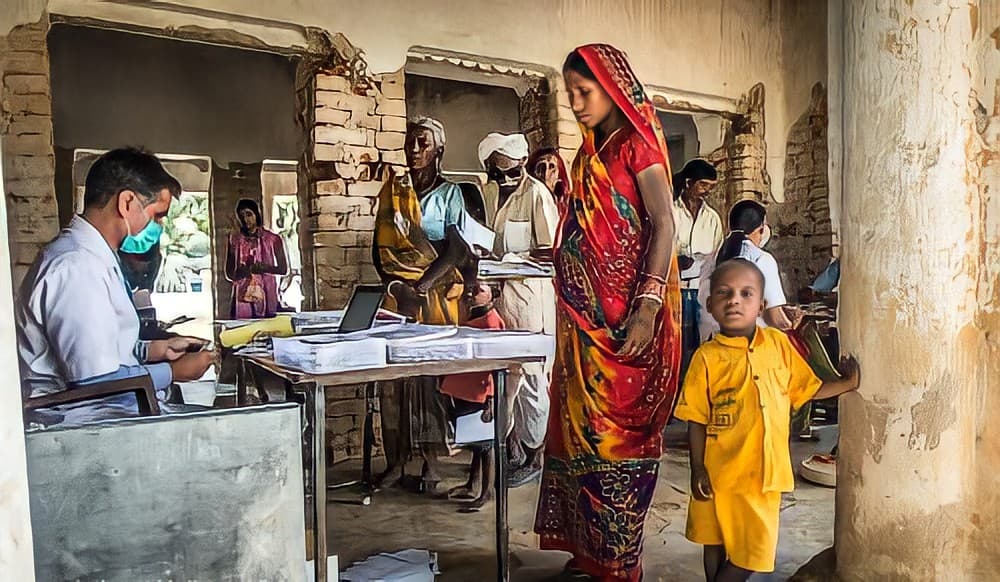
The Supreme Court has indicated that it may formulate constitutional guiding principles for compulsory rural service by medical students across India, highlighting the need to address the healthcare requirements of rural communities and the absence of clarity on a uniform national policy.
A Bench comprising Justice P.S. Narasimha and Justice Alok Aradhe made these observations on October 27, 2026, while hearing a challenge to Karnataka’s compulsory rural service requirements. The Court asked the Union Government to clarify whether it intended to formulate a national policy and which authorities it proposed to consult.
The observations were made during the hearing of a pending writ petition. The Court has not yet delivered a final judgment on the validity of the challenged requirements or established a binding nationwide obligation for medical graduates to serve in rural areas.
Background of the Case
The proceedings arise from a petition filed by Ashish Redu and others against the Government of Karnataka before the Supreme Court in W.P. (C) No. 332 of 2024.
The petition challenges the requirement of completing one year of compulsory public rural service as a condition for obtaining the necessary No-Objection Certificate (NOC) and becoming eligible for permanent registration with the Karnataka Medical Council.
The dispute concerns the Karnataka Compulsory Service Training by Candidates Completed Medical Courses Act, 2012, and the Karnataka Compulsory Service Training by Candidates Completed Medical Course Rules, 2015.
The statutory framework provides for compulsory service by specified categories of medical graduates and postgraduate candidates. Under the scheme described during the proceedings, eligible candidates must undertake one year of public rural service before obtaining the required NOC.
A notification dated July 28, 2023, extended the requirement to candidates admitted to private seats in private and deemed universities.
Challenge to the Compulsory Service Requirement
The petitioners contend that students admitted to private seats in private and deemed universities should not automatically be subjected to the same compulsory service conditions as candidates who benefited from government-funded medical education.
They argue that students paying substantially higher fees through private seats constitute a distinct category under Article 14 of the Constitution, which guarantees equality before the law and equal protection of the laws.
On this basis, the petitioners have sought directions requiring the concerned health authorities to issue the necessary NOC without insisting on an undertaking to perform compulsory rural service. They have also sought a direction to the Karnataka Medical Council to accept their applications for permanent registration.
These are the petitioners' submissions and requested reliefs; they have not been finally accepted or rejected by the Supreme Court.
Supreme Court Examines the Need for a Uniform Policy
During the October 27 hearing, Additional Solicitor General Aishwarya Bhati submitted that compulsory service requirements existed for postgraduate medical students on a rotational basis, while no corresponding requirement operated at the undergraduate level in the form discussed before the Court.
She also submitted that health is a State subject and that several States had introduced compulsory service bonds. According to her submissions, a committee had recommended that States could adopt a uniform bond arrangement.
Senior Advocate Raju Ramachandran, assisting the Court as amicus curiae, suggested that appropriate guidelines could be formulated to address legislative gaps by drawing upon Article 21 and the Directive Principles of State Policy.
The Additional Solicitor General, however, suggested that the Union Government could undertake consultations rather than having the Court impose a nationwide mandate that could affect institutions across the country.
The Bench focused on the need to clarify the underlying constitutional and policy considerations before determining how compulsory rural service should be implemented.
Right to Health and the Constitutional Responsibility of the State
Justice P.S. Narasimha observed that the issue had implications for the future availability of medical care in India. He indicated that the Court needed clarity on whether rural service by doctors should be recognised as a necessary policy measure for improving public health.
The Court distinguished between the underlying principle and the mechanism through which it might be implemented. Whether compulsory service should operate through bonds, regulations or another appropriate arrangement was a separate question from whether the policy itself was constitutionally justified.
Justice Narasimha also referred to the right to health as a fundamental right and emphasised the State's responsibility to ensure access to healthcare. He expressed concern that, as access to medical facilities increasingly involved privately operated hospitals, the healthcare needs of rural communities could be overlooked without an appropriate policy framework.
The Bench indicated that constitutional guiding principles could help address this concern while leaving the detailed formulation of the policy to the appropriate authorities.
These remarks reflect the Court's concerns during the hearing. They should not be understood as a final determination that every medical graduate in India is constitutionally required to undertake compulsory rural service.
Possible Constitutional Guiding Principles
The Bench indicated that it could formulate the constitutional requirements underlying compulsory rural service as guiding principles. Justice Narasimha suggested that the State could formulate the detailed framework in consultation with the relevant commission.
The approach under consideration would distinguish between establishing the constitutional principles relevant to rural healthcare and deciding how those principles should be implemented through legislation, regulations or service bonds.
The Court also sought clarity on whether the Union Government intended to develop a national policy and which stakeholders or authorities it would consult in that process.
No final set of guiding principles was issued during the reported hearing. The possibility of formulating such principles remains part of the ongoing proceedings.
Earlier Supreme Court Decision on Compulsory Service Bonds
The proceedings also refer to the Supreme Court's decision in Association of Medical Super Speciality Aspirants Residents and Others v. Union of India and Others, which concerned compulsory bonds associated with admission to postgraduate and super-speciality medical courses.
In that case, the Court rejected the challenge to the compulsory bond requirements. It also recognised concerns about the rigidity of certain State-imposed conditions and suggested that the Union Government and the Medical Council of India consider steps towards a uniform policy governing compulsory service by doctors trained in government institutions.
That decision provides relevant background to the present debate. However, the questions raised in Ashish Redu and others concern the applicability of Karnataka's service requirements, including their extension to students admitted to private seats, as well as the broader possibility of a uniform national framework.
Current Status and Next Steps
At the October 27 hearing, the Supreme Court deferred further consideration of the matter until the following week and asked the Union Government to clarify whether it intended to formulate a policy and identify the authorities with whom it proposed to consult.
The challenge to Karnataka's compulsory rural service requirements therefore remains pending. The Court has not finally decided whether the petitioners are entitled to exemption from the service requirement or whether the challenged notification is constitutionally valid.
Any subsequent policy proposal or judicial direction will need to be assessed in light of the further proceedings and the actual terms of any order passed by the Court.
Legal Significance
The proceedings raise an important question concerning the relationship between medical education, public healthcare obligations and access to treatment in underserved rural areas.
A uniform policy could potentially address differences between State-level arrangements and provide greater consistency in the treatment of medical graduates. At the same time, questions concerning the categories of students covered, the role of government funding, the nature and duration of service, and the legal mechanism for enforcing the obligation remain relevant.
The case also illustrates the distinction between a court's consideration of constitutional principles and the issuance of a binding legal direction. The Supreme Court's observations indicate that it is examining the need for a coherent policy framework, but they do not themselves establish a new nationwide compulsory service requirement.
The final legal position will depend on the subsequent orders in the pending case and any policy or legislative measures adopted by the competent authorities.