Background of the Case
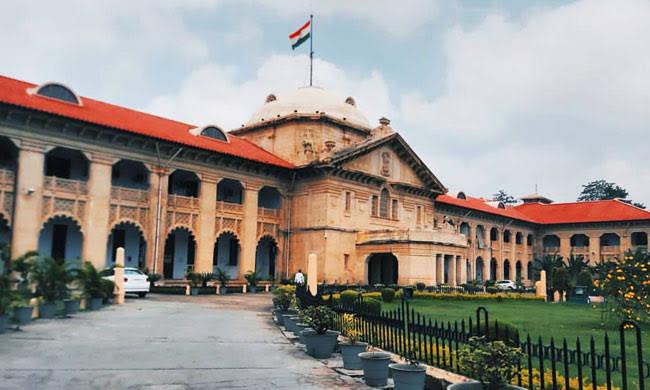
The Allahabad High Court was considering an appeal filed by Manoj Kumar Paswan challenging an order of the Special Judge (SC/ST Act), Kanpur Nagar, which converted his application under Section 173(4) of the Bharatiya Nagarik Suraksha Sanhita (BNSS), seeking police investigation, into a complaint case.
The appellant had alleged caste-based abuse and physical assault by police personnel following a dispute with his neighbour. He claimed that despite approaching senior police authorities, no effective action had been taken.
Application Under Section 173(4) BNSS Cannot Automatically Become a Complaint
The High Court held that an application seeking police investigation under Sections 173(4) and 175(3) BNSS must be independently examined on its merits.
A Magistrate cannot automatically convert such an application into a complaint merely because the court is not inclined to order a police investigation. If the court decides to follow the complaint procedure, it must record specific reasons considering the nature of the allegations and the relief sought.
Accused Must Receive All Complaint Documents
Referring to the first proviso to Section 223(1) BNSS, the Court emphasised that the proposed accused must receive a meaningful opportunity of hearing before cognizance is taken.
The Court specifically directed:
"The proposed accused shall be entitled, to receive copy of complaint as well as every document annex with and relied upon by the complainant in order to effective and meaningful ‘opportunity of hearing’ as provided under section 223 BNSS".
The Court further clarified that the right to be heard is not confined to oral arguments. Proposed accused persons may also submit written objections raising legal grounds such as lack of jurisdiction, limitation, statutory bars, absence of essential ingredients of an offence and failure of the allegations to disclose any criminal offence.
Magistrates must consider material legal objections and pass reasoned judicial orders.
Magistrates Must Avoid Conducting a Mini-Trial
The Court clarified that the pre-cognizance hearing does not require a detailed examination of disputed facts or evidence. Magistrates must not conduct a mini-trial, undertake roving inquiries or adjudicate disputed defence claims at this stage.
It also directed courts to examine the applicability of Section 223(2) BNSS when complaints are pursued against public servants, including the requirement of obtaining a superior officer's report and considering the public servant's explanation wherever the provision applies.
Further, criminal complaints arising from property disputes, civil disputes and commercial transactions must be examined to determine whether they independently disclose criminal offences or have been initiated with mala fide intentions.
Final Decision
Setting aside the impugned order, the High Court issued general directions to Magistrates and Special Courts dealing with criminal matters in Uttar Pradesh. It directed that these guidelines be circulated among judicial officers and incorporated into judicial training programmes.
Case Details
Case Name: Manoj Kumar Paswan v. State of U.P. and 5 Others
Court: Allahabad High Court
Date of Decision: 17 November 2026
Case Number: Criminal Appeal No. 7460 of 2025
Coram/Judge: Justice Santosh Rai