Background of the Case
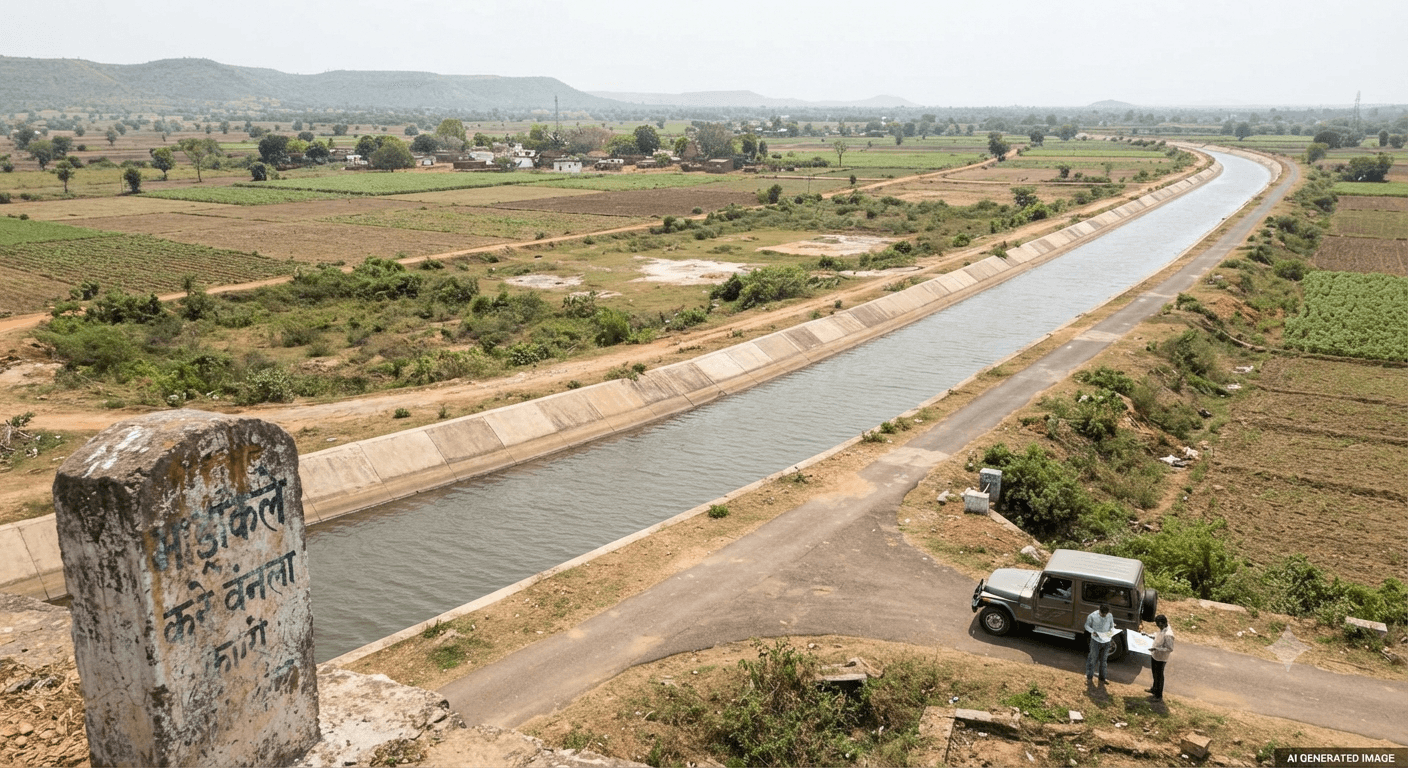
The Chhattisgarh High Court dismissed two writ petitions filed by landowners seeking restoration of portions of their agricultural lands acquired for the Minimata Bango Canal Project in Raigarh district.
The lands were acquired under the Land Acquisition Act, 1894, and the acquisition proceedings culminated in an award dated February 28, 2004. The petitioners claimed that substantial portions of their lands had remained unused even after completion of the canal construction.
They challenged the Collector's order dated September 27, 2021, rejecting their applications for restoration of the allegedly unutilised land.
Arguments of the Parties
The petitioners contended that revenue demarcation reports established that several portions of the acquired lands had not been affected by canal construction. They argued that the authorities had failed to provide adequate justification for retaining those portions.
Relying on Section 101 of the Right to Fair Compensation and Transparency in Land Acquisition, Rehabilitation and Resettlement Act, 2013, they submitted that unutilised land remaining unused for five years could be returned to its original owners or their legal heirs.
The State opposed the petitions, arguing that the acquisition had been completed under the 1894 Act and that the acquired land had vested absolutely in the Government. It further submitted that the remaining portions were required for inspection, maintenance, supervision and future operational requirements of the canal project.
Court's Observations
Justice Amitendra Kishore Prasad observed that once land is lawfully acquired and vests in the Government free from encumbrances, its subsequent non-utilisation does not automatically create a right in favour of the former owner to seek restoration or reconveyance.
Relying on the Supreme Court's decision in Indore Development Authority v. Manoharlal, the Court clarified that Section 101 of the 2013 Act applies only to acquisitions made under that legislation and cannot be extended to acquisitions completed under the 1894 Act.
The Court also referred to Govt. of A.P. v. Syed Akbar, reiterating that land acquired for one public purpose may subsequently be utilised for another public purpose.
Importantly, the Court observed that the absence of a physical structure on every portion of acquired land does not necessarily establish that such land has become surplus. Land required for access, inspection, maintenance and other allied operational purposes can legitimately remain vacant.
The Court further noted that the authorities had filed affidavits explaining the continuing and future requirements of the canal project, supported by relevant maps and technical material.
Final Decision
Holding that the petitioners had failed to establish any enforceable statutory right to reclaim the acquired land, the High Court dismissed both writ petitions without costs.
Relevant Judicial Observation
"Mere non-utilisation of the acquired land does not confer any enforceable right upon the erstwhile landowners to seek its restoration or reconveyance."
Case Details
Case Name: Bajrang Lal v. State of Chhattisgarh & Others; Bajrang Lal & Others v. State of Chhattisgarh & Others
Court: High Court of Chhattisgarh at Bilaspur
Date of Decision: November 5, 2026
Case Numbers: W.P.(C) No. 283 of 2022 and W.P.(C) No. 573 of 2022
Coram: Justice Amitendra Kishore Prasad