Background of the Case
The Allahabad High Court was hearing a habeas corpus petition filed by a daughter alleging that her father had been illegally detained by the police from September 5, 2026, although his formal arrest was recorded only on September 7, 2026.
The petition was filed by Petitioner X and her father against the State of Uttar Pradesh and four others. The daughter was pursuing Chartered Accountancy.
The dispute originated from allegations involving a person named Shahbaz, who was known to the petitioner's family. According to the petition, Shahbaz had allegedly sexually assaulted the daughter after giving her food mixed with intoxicants and had also prepared obscene photographs and videos of the incident.
The petitioners further alleged that on June 26, 2026, Shahbaz, accompanied by 8–10 persons, threatened and abused their family near their residence. The father subsequently approached the Station House Officer (SHO) of Mandawali Police Station and the Circle Officer, Najibabad, seeking legal action.
Registration of Criminal Cases and Alleged Illegal Detention
On June 29, 2026, Shahbaz allegedly lodged an FIR against the father and other family members under Sections 115(2), 352 and 351(2) of the Bharatiya Nyaya Sanhita, 2023.
Subsequently, the daughter also lodged an FIR on July 8, 2026, which was transferred to another police station.
The petition further referred to another FIR registered on October 6, 2026, against the father and certain other persons, alleging a honey-trap incident. The proceedings concerning this FIR formed the immediate background of the habeas corpus petition.
According to the petitioners, on September 5, 2026, they visited Nangal Police Station after being called by the police. At approximately 2:30 PM, while they were outside the police station in their vehicle, four persons travelling in a white Bolero allegedly surrounded their vehicle and forcibly took the father away.
The persons who took him away were alleged to be police personnel or members of the Special Operations Group (SOG) wearing plain clothes. A person accompanying the father attempted to record the incident on his mobile phone but was allegedly prevented from doing so.
The accompanying person subsequently contacted the UP-112 emergency service and reported the alleged forcible removal of the father.
Although the father was allegedly taken away on September 5, his formal arrest was recorded only on September 7, 2026. The daughter therefore approached the High Court alleging that her father had remained in unlawful police custody before his formal arrest.
High Court Seeks CCTV Footage
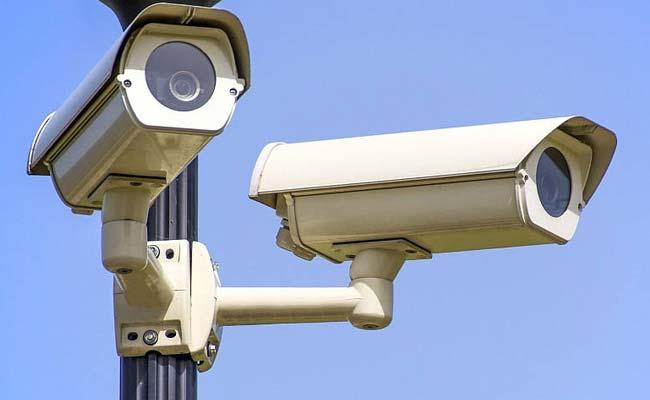
To ascertain the circumstances surrounding the alleged detention, the High Court, by an order dated October 13, 2026, directed the State authorities to produce CCTV recordings of Nangal Police Station covering the period from 1:00 PM on September 5, 2026, until 10:00 AM on September 7, 2026.
However, when the matter was subsequently taken up, the State informed the Court that the CCTV footage was unavailable.
The State relied upon a general diary entry dated September 5, 2026, made at 1:03 PM, and an affidavit filed by Annu Kumari, the then SHO of Nangal Police Station.
According to the explanation furnished by the police, a thunderstorm had caused water to enter the CCTV system through the LAN cable, resulting in the failure of the entire surveillance system at the police station.
Court's Observations on CCTV Malfunction
The Division Bench comprising Justice Achal Sachdev and Justice Atul Sreedharan expressed serious concern over repeated instances of CCTV footage not being made available when required by the Court.
The Bench observed that the state of civil liberties in Uttar Pradesh was shameful and expressed concern that the infringement of citizens' fundamental rights appeared to have become routine in the functioning of the police.
The Court also referred to another habeas corpus petition, Habeas Corpus Writ Petition No. 1117 of 2026, in which the broader issue concerning the failure of CCTV systems across the State was being examined separately and the judgment had been reserved.
Rejecting the police explanation that the CCTV system had malfunctioned, the Bench categorically held that such an excuse could not be accepted in a case involving allegations of unlawful detention.
CCTV Malfunction Cannot Be Used to Defeat Habeas Corpus Proceedings
The Court made it clear that the failure to produce CCTV footage, coupled with an explanation that the surveillance system was malfunctioning, could justify an adverse inference against the police authorities.
The Bench observed:
"The excuse of a CCTV malfunctioning is not available to the police in a case of unlawful detention. Any averment to that effect by the respondents concerned is sufficient for this Court to hold that the contention of the petitioners that the corpus was unlawfully detained is correct and that CCTV footage is deliberately not being provided to the Court in order to obfuscate the truth maliciously."
The Court thus accepted the petitioners' contention that the father had been unlawfully detained between September 5 and September 7, 2026.
The observation assumes particular significance in habeas corpus proceedings, where the Court examines the legality of a person's detention and can require public authorities to account for the circumstances in which a person has been taken into custody.
Adverse Entry in SHO's Service Record
The Bench was particularly critical of Annu Kumari, SHO of Nangal Police Station, for failing to provide the CCTV footage despite the Court's specific direction.
The Court drew a presumption that the footage was adverse to the SHO's interests and had been deliberately withheld.
Recording its displeasure over the conduct of the SHO, the Bench directed that its observations be entered into her service records. The Court further directed the State to consider whether she should be permitted to continue in her existing posting.
Final Decision
Allowing the habeas corpus petition, the High Court directed that the detained father be released forthwith, provided he was not required in connection with any other criminal case.
Although the petitioners had not specifically sought compensation in the proceedings, the Court clarified that they were at liberty to pursue compensation through other remedies available under law.
The Court also awarded litigation costs of ₹20,000 to the petitioners, directing the State Government to pay the amount within seven days. In the event of non-compliance, the petitioners were permitted to revive the petition before the Court.
The decision underscores the importance of CCTV surveillance in police stations and the responsibility of police authorities to preserve and produce relevant recordings when directed by constitutional courts. It also demonstrates that explanations concerning technical failures cannot automatically shield police authorities from judicial scrutiny in cases involving allegations of illegal detention.
Case Details
Case Name: Petitioner ‘X’ and another v. State of U.P. and 4 others
Court: Allahabad High Court
Date of Decision: November 3, 2026
Case Number: Habeas Corpus Writ Petition No. 1538 of 2026
Coram/Judges: Justice Achal Sachdev and Justice Atul Sreedharan