An A-Khata Is Not Proof of a Legally Approved Property
A recent title due-diligence exercise exposed a risk Bengaluru homebuyers often overlook. A building situated within a Rajakaluve (stormwater drain) buffer zone had an A-Khata despite lacking the requisite clearances and approvals. The incident illustrates why an A-Khata should never be treated as a guarantee of a property's legality.
What Does an A-Khata Actually Establish?
A Khata is an entry in the municipal assessment register identifying a property for property-tax collection. It does not establish ownership, certify compliance with the sanctioned building plan or establish that construction is legally permissible.
In T.V. Ramakrishna Reddy v. M. Mallappa (Supreme Court, 2021), the Supreme Court reiterated that a Corporation's Khata entry is merely a fiscal record for tax purposes and does not create or extinguish title to immovable property.
Similarly, in The Commissioner, BBMP v. Sri Jai M. Patil (Karnataka High Court, 2020), a Division Bench held that property-tax assessment does not cure deviations from the sanctioned building plan or prevent authorities from initiating statutory action against unauthorised construction.
Rajakaluve Buffer Regulations: What Has Changed?
Bengaluru's stormwater drain buffer regulations have undergone significant changes. In 2016, the National Green Tribunal prescribed buffer distances of 50 metres, 35 metres and 25 metres for primary, secondary and tertiary drains, respectively. However, in Mantri Techzone Pvt. Ltd. v. Forward Foundation (2019), the Supreme Court set aside the NGT's general buffer-zone directions while sustaining the directions against two specific project proponents.
On October 15, 2025, the Karnataka Government notified revised buffer distances of 15 metres, 10 metres and 5 metres for primary, secondary and tertiary drains, respectively, measured on either side from the drain's edge as per revenue records. These norms were incorporated into the amended zonal regulations published on October 17, 2026, with reference to the drain's actual ground alignment as well.
In June 2026, the Karnataka High Court issued notice to the State Government, Greater Bengaluru Authority and Bangalore Development Authority in a PIL challenging the reduction of these buffer distances. The issuance of notice was not a final determination of the challenge.
Why the Sarakki Lake Judgment Matters
In Sarakki Lake Area Improvement Trust v. State of Karnataka (February 20, 2026), a Division Bench comprising Chief Justice Vibhu Bakhru and Justice C.M. Poonacha held that a sanctioned building plan could not authorise construction within the 30-metre lake buffer prescribed under the then-applicable Revised Master Plan 2015. The Court directed the authorities to initiate appropriate proceedings for removal of unauthorised constructions.
The ruling reinforces that municipal building approval cannot override applicable planning restrictions. The 30-metre requirement in that case concerned a lake, not a Rajakaluve.
What Should Buyers Verify?
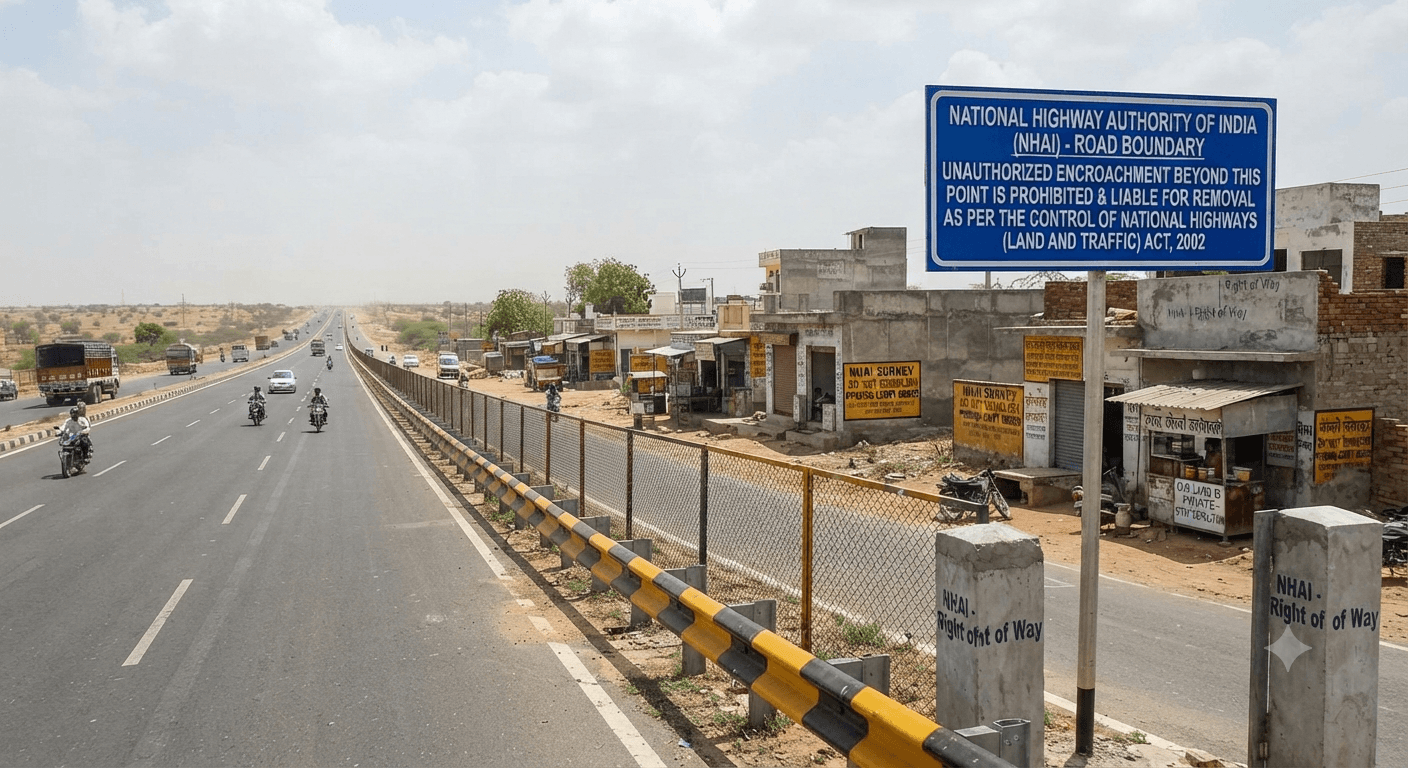
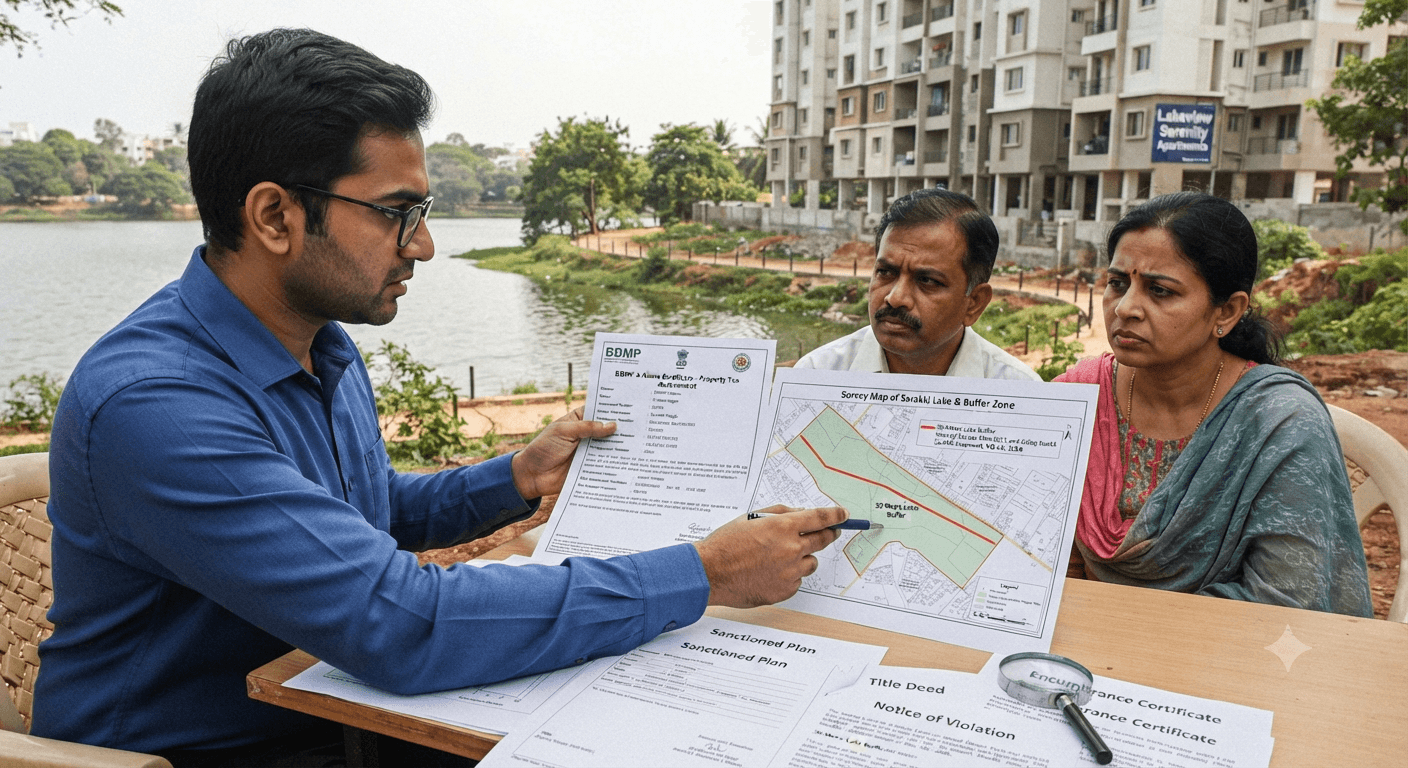
Before purchasing, buyers should examine village and survey maps to identify the Rajakaluve's location, classification and actual alignment. The applicable buffer must then be verified against the relevant planning regulations.
The sanctioned building plan, actual construction, occupancy certificate and requisite statutory clearances must also be independently examined. A bank's approval should not substitute for an independent legal and technical due-diligence exercise.
An A-Khata gets a property into the municipal tax records. It does not make an unauthorised building legal or guarantee that the property is safe to purchase.