Background of the Case
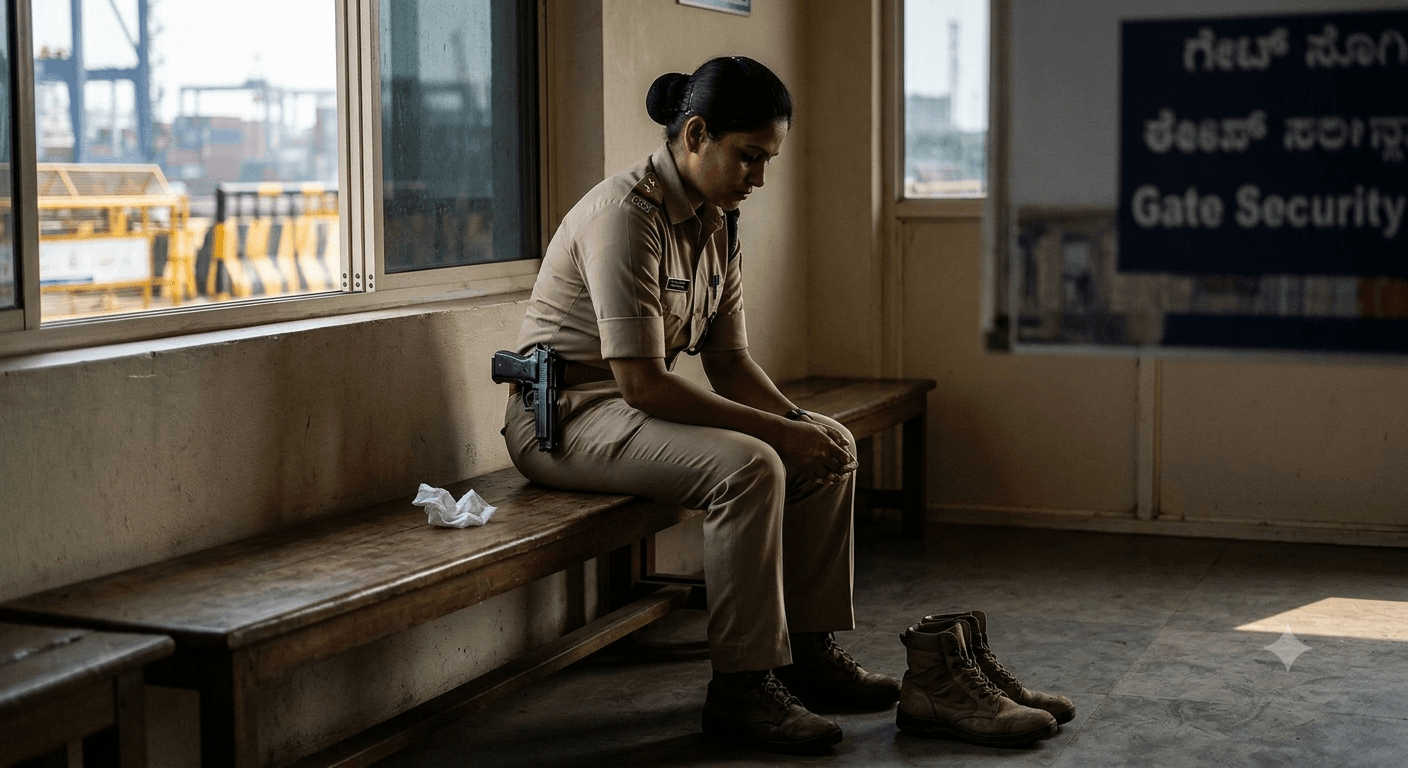
The case concerned Jyoti Bai, a Sub-Inspector attached to the Central Industrial Security Force (CISF), who allegedly attempted suicide on October 12, 2022, while posted as shift-in-charge at Mallya Gate, Mangaluru. She sustained serious injuries after firing a round from her service pistol at her abdomen and underwent major surgery.
Her counsel submitted that she had been experiencing severe mental distress following years of unsuccessful fertility treatment, including IVF procedures. A criminal case was registered against her under Section 309 of the Indian Penal Code (IPC).
She subsequently sought discharge under Section 239 CrPC read with Section 115 of the Mental Healthcare Act, 2017. However, the Judicial Magistrate First Class II, Mangaluru, rejected her application on December 26, 2024, prompting her to approach the High Court.
Statutory Protection Under Section 115
Section 115 of the Mental Healthcare Act, 2017, provides that a person attempting suicide shall be presumed to be under severe stress, unless proved otherwise, and shall not be tried and punished under Section 309 IPC.
The provision also places an obligation on the appropriate Government to provide care, treatment and rehabilitation to such persons to reduce the risk of further attempts.
Court's Observations
Justice Suraj Govindaraj observed that the statutory presumption under Section 115 must be considered by the investigating officer while deciding whether to file a chargesheet and by the Magistrate while considering an application for discharge.
The Court clarified that the provision does not prohibit registration of an FIR or investigation in every case involving an alleged suicide attempt. However, the prosecution must produce material capable of rebutting the statutory presumption of severe stress.
In the present case, the prosecution had not produced any such material. Consequently, the Magistrate had erred in rejecting the discharge application without properly considering the statutory protection.
Mental Health of Police and Security Personnel
The Court emphasised that personnel serving in police and security organisations also experience personal difficulties, family problems, anxiety, illness and emotional distress. Their professional responsibilities cannot justify neglect of their mental well-being.
The Court observed:
"Personnel entrusted with protecting the lives and safety of others must themselves be provided care, support and reasonable assistance when they face personal or mental health difficulties."
It further highlighted the connection between mental health, operational readiness and public safety, particularly for personnel carrying firearms.
The Court held that authorities must establish appropriate systems to assess the mental health and fitness of personnel both before issuing firearms and periodically thereafter. Reassessment must also be undertaken whenever circumstances warrant it.
It stressed the need for confidential counselling, professional mental healthcare, timely treatment and rehabilitation. Preventive measures concerning access to firearms should not become punitive or result in automatic exclusion from service.
Final Decision
The Karnataka High Court allowed the criminal petition, set aside the Magistrate's order and allowed the officer's discharge application under Section 239 CrPC read with Section 115 of the Mental Healthcare Act, 2017.
Consequently, she was discharged from the proceedings under Section 309 IPC. The Registry was also directed to forward a copy of the order to the Director General of CISF, the Director General of Police, Karnataka, and heads of other State organisations having personnel entrusted with firearms.
Case Details
Case Name: Jyoti Bai v. State of Karnataka & Anr.
Court: Karnataka High Court
Date of Decision: 12 November 2026
Case Number: Criminal Petition No. 8281 of 2025
Coram/Judge: Justice Suraj Govindaraj