Handwriting Expert's Report Cannot Be Relied Upon Without Examining the Expert
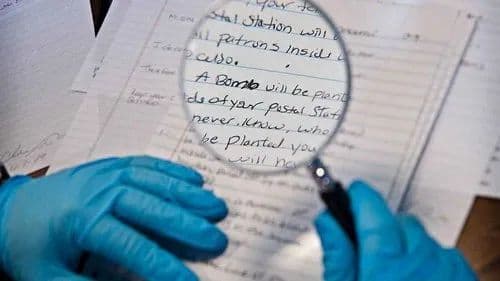
The Supreme Court of India has held that a handwriting expert's report cannot be relied upon to establish the authorship of a disputed document unless the expert is examined as a witness and given an opportunity to be cross-examined.
The Court observed that handwriting comparison is not an exact science and that an expert's opinion may involve different interpretations. Therefore, the expert's opinion must be tested through cross-examination before the court can rely upon it to determine who authored a disputed document.
The Court further clarified that such a report does not fall within the category of reports that can be admitted under Section 293 of the Code of Criminal Procedure, 1973 (CrPC). It must be proved by examining the expert in court.
The observations were made while allowing an appeal against a conviction under Section 306 IPC for abetment of suicide.
Background of the Case
The appellant, Goverdhan, was married to Anju in November 1996, and they had a son from the marriage.
According to the prosecution, the appellant and his father subjected Anju to harassment over dowry and other matrimonial issues. She was allegedly forced to leave the matrimonial home in February 2009 and began residing with her parents.
Anju subsequently initiated criminal proceedings against the appellant under Sections 498A, 406 and 323 IPC. She also instituted proceedings under the Protection of Women from Domestic Violence Act, 2005, and sought maintenance.
The prosecution alleged that despite these proceedings, the appellant continued to harass her and sent her four letters containing abusive language and threats.
On 18 January 2011, Anju sustained burn injuries at her parental home and died on the same day. The prosecution alleged that she had committed suicide because of the harassment allegedly inflicted upon her by the appellant.
On 2 February 2011, approximately 15 days after her death, her mother lodged a complaint alleging that the appellant had driven her daughter to commit suicide. Based on this complaint, an FIR was registered under Section 306 IPC.
Conviction by the Trial Court and High Court
The prosecution relied primarily on four letters allegedly written by the appellant to the deceased to establish the alleged harassment and abetment.
To prove that the letters were written by the appellant, the prosecution produced a handwriting expert's report comparing the disputed letters with two other documents allegedly written by him.
The Trial Court accepted the prosecution's case and convicted the appellant under Section 306 IPC. He was sentenced to ten years of rigorous imprisonment and fined ₹50,000.
The Rajasthan High Court upheld the conviction on 11 May 2017, agreeing that the appellant's alleged continuous harassment and humiliation amounted to instigation to commit suicide.
The appellant challenged the High Court's decision before the Supreme Court.
Handwriting Expert Was Not Examined During Trial
The Supreme Court found a significant defect in the prosecution's evidence concerning the authorship of the four letters.
Although the prosecution had produced a handwriting expert's report, the expert who prepared the report was never examined during the trial.
The Court also noticed that the investigating officer had not obtained specimen handwriting of the appellant during the investigation.
Instead, the disputed letters were compared with an application allegedly submitted by the appellant to the investigating officer and a pocket diary purportedly written by him and produced by his elder brother.
The Supreme Court observed that the prosecution was required to establish not only the similarities between the disputed letters and the comparison writings but also that the documents used for comparison were genuinely written by the appellant.
Merely producing an expert's report could not establish the authorship of the disputed letters when the authenticity of the comparison documents was itself not reliably established.
Handwriting Expert Must Be Examined and Subjected to Cross-Examination
The Supreme Court referred to its earlier decision in Magan Bihari Lal v. State of Punjab (1977), wherein it cautioned courts against placing excessive reliance on handwriting expert opinions.
The Court reiterated that handwriting identification is not infallible and that expert opinion is essentially opinion evidence. Such evidence must be approached with caution and, wherever necessary, supported by other reliable evidence.
The Court also relied upon Patel Babubhai Manohardas v. State of Gujarat (2025), which dealt with the evidentiary value of a handwriting expert's report when the expert had not been examined before the court.
Applying these principles, the Supreme Court clarified that the prosecution cannot establish the authorship of a disputed document merely by producing a handwriting expert's report without examining its author.
Relevant Extract from the Judgment
The Supreme Court observed in paragraph 23:
"Thus, if, at all, the prosecution wishes to rely upon the report of a handwriting expert in order to prove and attribute the handwriting on a particular document to that of another person, it is essential to examine the handwriting expert in evidence because handwriting comparison is not a perfect science and may be the subject matter of different interpretations. Hence, testing the opinion of the handwriting expert on the rigour of cross-examination is essential before the report can be relied upon. Such reports are not admissible under Section 293 CrPC (corresponding to Section 329 of the Bharatiya Nagarik Suraksha Sanhita, 2023) and hence, have to be proved as any other report by examining the expert in evidence."
This observation establishes that when the authorship of a document is disputed and the prosecution seeks to rely upon a handwriting expert's opinion, the expert must ordinarily be examined so that the correctness and basis of the opinion can be tested through cross-examination.
Failure to Deny Authorship Under Section 313 CrPC Cannot Replace Proof
The Trial Court and the High Court had also relied upon the fact that the appellant had not specifically denied writing the disputed letters in his statement recorded under Section 313 CrPC.
The Supreme Court rejected this reasoning.
It explained that the prosecution must independently establish the guilt of the accused beyond reasonable doubt. Any weakness in the defence cannot be used to compensate for the prosecution's failure to prove an incriminating circumstance.
The Court clarified that an accused person's failure to specifically deny authorship of a disputed document in a Section 313 statement cannot, by itself, establish that the document was written by that person.
Relevant Extract from the Judgment
The Supreme Court observed in paragraph 24:
"It is a settled principle of criminal jurisprudence that the prosecution must stand on its own legs and establish the guilt of the accused beyond reasonable doubt. It cannot derive strength from any perceived weakness in the defence or treat the failure of the accused to furnish a specific denial as a substitute for proof of an incriminating circumstance. The statement of the accused under Section 313 CrPC is required to be considered in its entirety, and any omission to specifically deny a particular circumstance cannot, by itself, establish the authorship of a disputed document."
Thus, the burden of proving the authorship of a disputed document continues to rest upon the party relying upon it.
Letters Did Not Establish Abetment Even If Their Authorship Was Assumed
The Supreme Court examined the contents of the four letters independently and considered whether they could establish the offence of abetment of suicide, even assuming that the appellant had written them.
The Court noticed that although the letters contained abusive, derogatory and threatening expressions, they also included repeated requests for reconciliation, withdrawal of pending matrimonial proceedings and resumption of marital life.
The Court considered the contents of the letters in their entirety rather than examining individual expressions in isolation.
It further observed that the deceased had been living separately from the appellant for more than two years and had been actively pursuing legal proceedings against him.
The evidence also failed to establish a convincing connection between the alleged receipt of the letters, the deceased's mental condition and her subsequent death.
The Court noted that the deceased's family members had not raised the allegation of suicide or harassment through the letters during the initial inquest proceedings. The complaint alleging abetment was lodged approximately 15 days after her death, without a satisfactory explanation for the delay.
The Supreme Court also observed that no charge under Section 498A IPC had been proposed against the appellant in the proceedings arising out of the alleged conduct.
Legal Requirements for Abetment of Suicide
The Court examined the ingredients of abetment under Section 107 IPC, which include instigation, conspiracy or intentional aid in the commission of an act.
It held that even if the letters were accepted as genuine, their contents did not establish the necessary ingredients of abetment.
The Court found that the prosecution had failed to establish that the appellant's conduct constituted instigation or abetment that led to the deceased committing suicide.
In paragraph 30, the Supreme Court observed:
"We feel that the contents of the letters, even if admitted to be in the handwriting of the accused, were not such which could have constituted the necessary ingredients of abetment as defined under Section 107 IPC. Admittedly, the deceased had left the company of the appellant and was living at her father’s house for the last more than 2 years of the incident. She had instituted litigation against the appellant and was pursuing the same actively. Hence, the letters by themselves cannot be construed to be the instigating material which was the immediate cause for the victim to have committed suicide."
The Court accordingly concluded that the prosecution had failed to establish the charge under Section 306 IPC beyond reasonable doubt.
Final Decision of the Supreme Court
The Supreme Court held that the Trial Court and the Rajasthan High Court had committed an error in relying upon the disputed letters without satisfactory proof of their authorship through legally admissible and reliable evidence.
It further held that the contents of the letters, even if assumed to have been written by the appellant, did not establish the necessary ingredients of abetment of suicide under Sections 306 and 107 IPC.
Consequently, the Supreme Court allowed the appeal, set aside the judgments of the Trial Court and the Rajasthan High Court, and acquitted the appellant of the charge under Section 306 IPC.
The appellant, who was already on bail, was not required to surrender, and his bail bonds were discharged.
Case Details
Case Name: Goverdhan v. The State of Rajasthan
Court: Supreme Court of India
Case Number: Criminal Appeal No. 1394 of 2017
Neutral Citation: 2026 INSC 1190
Date of Decision: 3 November 2026
Bench: Justice Sandeep Mehta and Justice Devendra Kumar Upadhyaya
Relevant Provisions: Sections 107 and 306 of the Indian Penal Code, 1860; Section 293 of the Code of Criminal Procedure, 1973; Section 329 of the Bharatiya Nagarik Suraksha Sanhita, 2023.