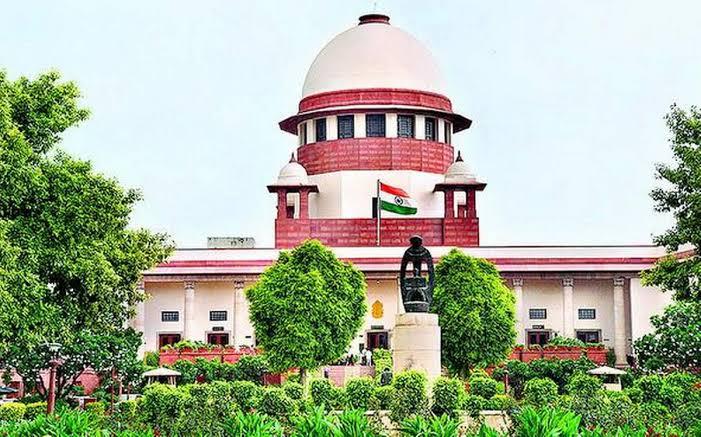

Arbitrator Cannot Exceed ₹2 Crore Limit Of Arbitral Reference: Supreme Court
The Supreme Court has held that an arbitrator or umpire cannot award compensation beyond the monetary limits of the dispute referred to arbitration. It ruled that a party cannot unilaterally expand the scope of an arbitral reference through subsequent correspondence or a mere reservation of rights to claim additional damages.
Background of the Case
The dispute arose from a 1986 technical collaboration agreement between Neycer (India) Ltd. and GMB Ceramics Ltd. concerning the establishment of a sanitaryware manufacturing plant.
Following disputes over contractual obligations and project delays, GMB initiated arbitration in 1989. While nominating its arbitrator, GMB quantified its claim at ₹2 crore. However, the Umpire subsequently awarded approximately ₹11.69 crore, together with interest at 15% per annum.
Neycer challenged the award before the Calcutta High Court. In 2015, a Single Judge restricted the award to ₹2 crore, holding that the Umpire had exceeded the scope of the reference. However, a Division Bench reversed that decision in 2018, following which Neycer approached the Supreme Court.
Supreme Court's Observations
A Bench comprising Justice Dipankar Datta and Justice Satish Chandra Sharma examined whether the Umpire could award amounts exceeding the monetary limit specified in GMB's original reference.
The Court observed that an arbitrator derives authority from the agreement and the reference made by the parties. Any decision concerning disputes falling outside that reference amounts to an excess of jurisdiction.
The Court found that GMB had expressly limited its claim to ₹2 crore while nominating its arbitrator. A subsequent letter reserving the right to claim additional damages could not enlarge the reference after the arbitral tribunal had been constituted.
The Court further clarified that contesting claims on merits, while maintaining a jurisdictional objection, does not amount to waiver or confer jurisdiction upon the arbitrator.
Observing that an umpire cannot confer jurisdiction upon himself by misconstruing the terms of reference, the Court held:
"Once the reference was crystallised by the appointment of GMB’s arbitrator per Ext. G-71 for a claim of Rs.2,00,00,000/- (Rupees two crore), GMB could not unilaterally enlarge the scope of the reference by a subsequent letter, i.e., Ext. G-72."
Final Decision
The Supreme Court set aside the Calcutta High Court Division Bench's judgment and restored the Single Judge's order restricting the principal award to ₹2 crore.
The Court also declined to sustain a separate claim of ₹2.03 crore towards projected advertising expenditure, observing that the claim was speculative and unsupported by evidence of actual expenditure.
Considering that Neycer had already deposited ₹4 crore, comprising ₹2 crore towards principal and ₹2 crore towards interest, which GMB had withdrawn, the Court directed that the amount be treated as full and final satisfaction of the modified award. Neither party could recover any further amount under the award.
Case Details
Case Name: Neycer (India) Ltd. v. GMB Ceramics Ltd.
Court: Supreme Court of India
Date of Decision: 18 November 2026
Case Number: Civil Appeal Nos. 5937–5938 of 2021
Neutral Citation: 2026 INSC 1251
Coram/Judges: Justice Dipankar Datta and Justice Satish Chandra Sharma