Supreme Court Disposes of Challenge
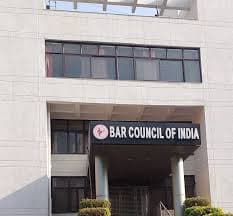
The development took place in Rishabh Duggal v. Bar Council of India, a petition challenging the validity of the BCI's decision to reintroduce upper-age restrictions for admission to law degree programmes.
A Bench comprising Chief Justice of India Surya Kant, Justice Joymalya Bagchi and Justice V. Mohana considered the matter.
Advocate Radhika Gautam, appearing for the BCI, informed the Court that the General Council of the Bar Council of India had resolved to withdraw the upper-age restrictions applicable to both three-year and five-year LL.B. courses.
In view of the subsequent decision of the BCI, the Supreme Court disposed of the petition as having become infructuous, since the restriction challenged by the petitioner had been withdrawn.
Background of the Age Restrictions
The controversy arose from Clause 28 of Schedule III of Rule 11 of the Bar Council of India's Rules of Legal Education, 2008.
The provision prescribed an upper-age limit for candidates seeking admission to law degree programmes. For the five-year integrated LL.B. course, the prescribed maximum age was 20 years for general-category candidates and 22 years for candidates belonging to Scheduled Castes, Scheduled Tribes and other specified backward communities.
The BCI had withdrawn the age restriction in 2013 following an examination of the issue by an expert committee, which had expressed concerns regarding its constitutional validity.
However, through a circular dated September 17, 2016, the BCI restored Clause 28, thereby reviving the restrictions on admission to law courses.
The restoration of the provision became the subject of legal challenges before various High Courts and subsequently before the Supreme Court.
Challenge Before the Supreme Court
Rishabh Duggal approached the Supreme Court challenging the BCI's 2016 circular.
The principal contention was that the BCI's statutory authority to prescribe minimum qualifications for legal education could not automatically be extended to impose maximum age limits on candidates seeking admission to law courses.
The petitioner contended that the restriction was arbitrary and violated Articles 14, 19(1)(g) and 21 of the Constitution.
It was also argued that excluding otherwise eligible candidates merely because they had crossed a particular age was an unreasonable restriction on their opportunity to pursue legal education.
Reliance was placed on the Supreme Court's decision in Indian Council of Legal Aid & Advice v. Bar Council of India, in which an age restriction preventing persons above 45 years from enrolling as advocates had been struck down.
The petitioner argued that the principle underlying that decision was relevant to the challenge against restricting admission to legal education on the basis of age.
Conflicting Decisions of High Courts
The age restrictions had also resulted in differing judicial opinions across High Courts.
The Punjab and Haryana High Court and the Bombay High Court had declared the relevant restrictions invalid, whereas the Madras High Court had upheld the age-limit provision.
The conflicting decisions created uncertainty regarding the validity and enforceability of the BCI's admission restrictions.
The matter before the Supreme Court therefore raised important questions concerning the extent of the BCI's statutory powers and the permissibility of imposing upper-age restrictions on candidates seeking legal education.
Supreme Court's Earlier Intervention
The Supreme Court had initially stayed the BCI's decision prescribing upper-age restrictions in March 2017.
The issue continued to remain under consideration for several years.
During the hearing on September 25, 2026, the Supreme Court sought clarification from the BCI on whether it was willing to withdraw the restrictions.
The BCI had initially sought time to obtain instructions regarding its position.
During those proceedings, the Bench questioned whether the residential nature of certain five-year law courses could justify imposing an upper-age restriction, particularly when several institutions offered non-residential programmes.
The Court indicated that if the BCI decided against withdrawing the restriction, it could examine the legal questions concerning the authority of the Council to prescribe such limits.
BCI's Decision to Withdraw the Restrictions
Following the Supreme Court's intervention, the BCI reconsidered the issue.
The General Council considered a reasoned order passed by former Delhi High Court Chief Justice Rajendra Menon, Co-Chairman of the Legal Education Committee, along with the recommendations of the Standing Committee on Legal Education.
The Council also took note of the Supreme Court's earlier directions concerning reconsideration of the disputed restrictions.
Upon independent consideration, the General Council concluded that prescribing an absolute upper-age limit lacked sufficient academic justification.
The Council observed that the existing requirements governing educational qualifications, attendance, teaching hours, examinations and professional training were sufficient to maintain the standards of legal education.
It further recognised that these requirements could safeguard academic standards without excluding otherwise eligible candidates merely because of their age.
The General Council accordingly resolved to withdraw the upper-age restrictions for admission to both three-year and five-year law programmes.
Legal Significance of the Decision
The withdrawal removes the age-based barrier that had prevented otherwise eligible candidates from pursuing LL.B. courses after crossing the prescribed age limits.
The development is particularly relevant to candidates who wish to enter the legal profession after gaining experience in other occupations or completing other academic qualifications.
However, the Supreme Court's disposal of the petition as infructuous should not be understood as a judicial declaration that the earlier age restrictions were unconstitutional.
The Court closed the proceedings after the BCI itself withdrew the disputed restrictions. Consequently, the constitutional questions concerning the BCI's authority to prescribe upper-age limits were not finally adjudicated on merits in this proceeding.
The withdrawal is therefore the result of the BCI's decision to reconsider and remove the restrictions rather than a final judicial ruling on their constitutional validity.