
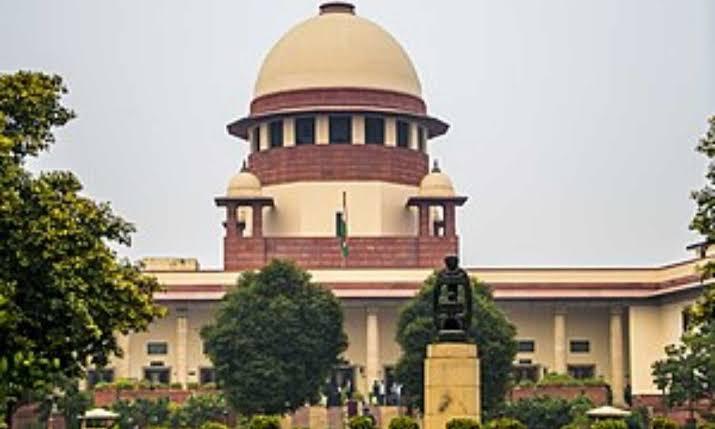
Background of the Case
The Supreme Court of India, in Kousik Pal v. B.M. Birla Heart Research Centre & Ors., examined the distinction between the powers of the West Bengal Clinical Establishment Regulatory Commission and the State Medical Council in dealing with complaints arising from deficiencies in patient care and allegations of medical negligence.
The dispute arose following the death of Arati Pal, mother of the appellant Kousik Pal, who had been admitted to B.M. Birla Heart Research Centre for medical treatment in 2017.
After remaining in the hospital for five days without improvement in her condition, she was referred to the Calcutta Medical Research Institute on May 7, 2017, on the recommendation of her primary consultant, Dr. Shuvo Dutta.
The discharge summary was prepared by Dr. Tanmoy Chakraborty, who described her condition as 'stable'. She was subsequently transferred to the other hospital at approximately 1:45 a.m. on May 8, 2017. However, she died approximately 16 hours after the transfer.
Aggrieved by the circumstances surrounding his mother's treatment and death, Kousik Pal lodged a complaint against the hospital on May 12, 2017. He alleged negligence in detecting her condition, delay in shifting her to another hospital, improper medication, incorrect diagnosis and misleading information provided to the family.
Findings of the Clinical Establishment Regulatory Commission
The West Bengal Clinical Establishment Regulatory Commission considered the complaint and delivered its decision on February 2, 2018.
During the proceedings, the Commission examined the qualifications of the medical personnel involved in the patient's treatment and identified deficiencies concerning the hospital's staffing and patient care arrangements.
The Commission found that Dr. Ashok Giri, who headed the hospital's Non-Invasive Department, did not possess the requisite recognised qualification to undertake the relevant specialised clinical interpretation.
His Post-Graduate Diploma in Clinical Cardiology obtained from Indira Gandhi National Open University was not recognised by the Medical Council of India or the West Bengal State Medical Council.
The Commission also found that Ms. Chaitali Kundu, who was involved in conducting the relevant procedures, did not possess qualifications recognised by the State Medical Council for the position she was performing. The records also indicated that she had been described as a female attendant rather than an echocardiography technician.
The Commission considered these circumstances to constitute deficiencies in patient care and unethical trade practices.
It also took note of the incorrect description of the deceased patient's condition as 'stable' in the discharge summary. Dr. Chakraborty had admitted in his affidavit that the description was an error and not merely a clerical mistake.
However, the Commission expressly refrained from deciding whether this particular conduct amounted to professional medical negligence, as such complaints fell within the jurisdiction of the West Bengal State Medical Council.
Considering the deficiencies identified in the hospital's functioning, the Commission awarded compensation of Rs.20 lakh to Kousik Pal for the lapses in patient care and the resulting mental shock, suffering and harassment experienced by the family.
Proceedings Before the Calcutta High Court
The hospital challenged the Commission's decision before the Calcutta High Court under Article 226 of the Constitution of India.
The Single Judge dismissed the hospital's challenge and upheld the Commission's authority to examine whether the medical personnel employed by the hospital possessed the requisite qualifications.
The Court observed that examining the qualifications of doctors and paramedical personnel was necessary for determining whether the hospital had complied with the prescribed standards of patient care.
It also noted that the Commission had not adjudicated the question of professional medical negligence, which remained within the jurisdiction of the State Medical Council.
Dr. Ashok Giri separately challenged the Commission's findings, but his challenge was also unsuccessful before the Single Judge.
However, the Division Bench of the Calcutta High Court subsequently reversed these decisions in its judgment dated December 15, 2023.
The Division Bench held that the Commission lacked jurisdiction to determine issues concerning the professional qualifications and conduct of medical practitioners where such questions involved matters falling within the specialised jurisdiction of the State Medical Council.
It also observed that deficiencies in patient care and medical negligence were so closely interconnected that they could not be separated for adjudication by different authorities.
The Division Bench further questioned whether the material on record established any connection between the ECG-related procedures performed by Dr. Giri and Ms. Kundu and the subsequent death of the patient.
It therefore set aside the Commission's findings, prompting Kousik Pal to approach the Supreme Court.
Legal Issue Before the Supreme Court
The principal question before the Supreme Court was whether the Commission established under the West Bengal Clinical Establishments (Registration, Regulation and Transparency) Act, 2017, had the authority to examine the qualifications of medical personnel, determine deficiencies in patient care and award compensation to the patient's legal representative.
The Court was particularly required to examine whether exercising these powers would amount to encroaching upon the jurisdiction of the State Medical Council to adjudicate complaints of professional medical negligence.
Relevant Provisions of the West Bengal Clinical Establishments Act, 2017
The Supreme Court examined several provisions of the Act to determine the extent of the Commission's jurisdiction.
Section 29 deals with minor and major deficiencies arising from violations of the Act or rules made under it. Major deficiencies that pose an imminent danger to the health and safety of patients or members of the public and cannot be rectified within a reasonable time may attract a penalty extending to Rs.10 lakh.
Section 33 specifically provides for compensation where a clinical establishment causes injury or death to a patient due to negligence or deficiency in providing services.
Under Section 33(1), the Commission may direct the clinical establishment to pay compensation to the victim or the victim's legal representative, subject to the statutory limits.
In cases involving death, the compensation cannot be less than Rs.10 lakh. The provision also contemplates interim relief to the next of kin within 30 days of the incident.
Section 36 establishes the West Bengal Clinical Establishment Regulatory Commission and entrusts it with the responsibility of regulating and supervising clinical establishments to ensure accountability, transparency and proper patient care.
Section 38 specifies the Commission's powers and functions.
Section 38(1)(iii) authorises the Commission to examine complaints relating to patient care services, deviations from declared fees and charges, refusal to provide medical records and alleged irrational or unethical trade practices.
It also expressly provides that complaints of medical negligence against medical professionals shall be dealt with by the respective State Medical Councils.
Further, Section 38(1)(ix) empowers the Commission to award appropriate compensation not exceeding Rs.50 lakh, including interim compensation.
Section 38(1)(x) requires the Commission to ensure that clinical establishments employ only properly trained medical and paramedical personnel, including doctors, nurses, technicians and pharmacists.
Supreme Court's Observations on the Qualifications of Medical Personnel
The Supreme Court disagreed with the Division Bench's view that the Commission could not examine the qualifications of medical personnel employed by a clinical establishment.
The Court observed that the Act was enacted to ensure minimum standards of facilities and services in clinical establishments. This necessarily required the Commission to examine whether the personnel engaged by hospitals possessed the requisite qualifications and training.
The definition of a service provider under Section 2 of the Act covers medical practitioners as well as paramedical professionals and other appropriately trained and qualified persons.
Consequently, the Commission was entitled to examine whether the personnel employed by the hospital satisfied the necessary qualification requirements.
The Court also considered a communication dated June 25, 2019, issued by the Board of Governors of the Medical Council of India, which clarified the minimum qualifications required for conducting and clinically interpreting echocardiograms.
The communication indicated that while a medical graduate or trained paramedic could conduct the test, an MD (Medicine) qualification was required for clinical interpretation.
The Supreme Court found that Dr. Giri did not possess the requisite qualification for the clinical interpretation concerned.
It therefore held that the Commission's findings regarding the qualifications of Dr. Giri and Ms. Kundu were within its statutory authority.
Deficiency in Patient Care and the Incorrect Discharge Summary
The Supreme Court also examined the circumstances surrounding the preparation of the deceased patient's discharge summary.
It observed that Section 36 of the Act imposed a responsibility upon the Commission to ensure accountability and transparency in the delivery of patient care services.
Transparency required medical practitioners and clinical establishments to communicate the actual condition of a patient to their family members or attendants.
The Court was critical of the fact that the patient's condition had been described as stable despite the circumstances surrounding her transfer to another hospital.
It observed that merely describing the incorrect entry in the discharge summary as an error could not absolve the concerned doctor of responsibility.
The Court further observed that if the doctor preparing the discharge documents had properly informed the appellant about the precarious condition of his mother, he might have taken an alternative decision regarding her transfer.
The Court thus emphasised that transparency in patient care involves more than maintaining medical records. It also requires hospitals and medical personnel to communicate material information about a patient's actual condition to the family.
Power to Award Compensation Is Distinct From Power to Adjudicate Medical Negligence
The central issue before the Supreme Court concerned the interpretation of Section 38(1)(iii) of the Act.
The provision reserves complaints of professional medical negligence for adjudication by the respective State Medical Councils. However, it simultaneously empowers the Commission to examine complaints concerning deficiencies in patient care services and award compensation.
The Supreme Court clarified that these powers operate in distinct fields and must not be confused with one another.
In the present case, the Commission had expressly refrained from determining whether Dr. Chakraborty's conduct amounted to professional medical negligence.
Instead, it examined the hospital's compliance with patient care standards, particularly whether the personnel employed by it possessed the necessary qualifications and whether deficiencies existed in the services provided.
The Supreme Court held that such an examination was expressly permitted under the Act.
The Court also considered the composition of the Commission, which includes members from medical fields such as diagnostics and public health, along with persons from law, academia and other disciplines.
It observed that the Commission's findings could not be regarded as having been made without consideration of the medical aspects involved.
The Court accordingly rejected the Division Bench's approach of treating patient care deficiencies and professional medical negligence as inseparable matters that could only be examined by the State Medical Council.
Supreme Court's Important Judicial Observation
While explaining the distinction between the Commission's statutory powers and the jurisdiction of the State Medical Council, the Supreme Court made the following observation in paragraph 14 of its judgment:
"The power to grant compensation as is given under this Act, is separate and distinct from the power of the State Medical Council to examine the presence or absence of medical negligence on the part of a professional, and it nowhere interferes with the power of the State Medical Council to adjudicate the complaints of medical negligence."
The Court further observed that accepting the Division Bench's interpretation would make it difficult for the Commission to discharge its statutory responsibilities in several cases involving deficiencies in patient care.
This would defeat the legislative intention behind the West Bengal Clinical Establishments Act, 2017.
Final Decision of the Supreme Court
The Supreme Court allowed the appeal filed by Kousik Pal and set aside the Calcutta High Court Division Bench's judgment dated December 15, 2023.
It restored the findings of the West Bengal Clinical Establishment Regulatory Commission dated February 2, 2018, as upheld by the Single Judge of the High Court on September 24, 2019.
The Court directed B.M. Birla Heart Research Centre to pay the compensation of Rs.20 lakh within eight weeks from the date of the judgment, together with interest at 6% per annum calculated from the date of the Commission's award.
The appeal was accordingly allowed, with no order as to costs.
Legal Significance of the Decision
The judgment clarifies the distinction between regulatory oversight of clinical establishments and disciplinary adjudication of professional medical negligence.
A Clinical Establishment Regulatory Commission, where empowered by the applicable statute, can examine whether hospitals maintain prescribed standards of patient care, employ appropriately qualified personnel and comply with statutory obligations concerning transparency and accountability.
The reservation of professional medical negligence complaints to State Medical Councils does not prevent such regulatory commissions from independently examining deficiencies in patient care or exercising their statutory power to award compensation.
The decision also reinforces the obligation of hospitals to ensure that medical and paramedical personnel possess recognised qualifications appropriate to the services they provide.
Importantly, the judgment interprets the specific statutory framework applicable in West Bengal. The powers exercised by the Commission in this case arise from the West Bengal Clinical Establishments (Registration, Regulation and Transparency) Act, 2017, and should not automatically be attributed to regulatory authorities in other States without examining their respective statutory provisions.
Case Details
Case Name: Kousik Pal v. B.M. Birla Heart Research Centre & Ors.
Court: Supreme Court of India
Date of Decision: December 19, 2025
Case Number: Civil Appeal No. 15066 of 2025 (Arising out of SLP(C) No. 8365 of 2024)
Neutral Citation: 2025 INSC 1487
Coram: Justice Sanjay Karol and Justice Manoj Misra